Plantar Fasciitis Treatment in Hudsonville
Drug-free plantar fasciitis and heel pain relief in Hudsonville, MI. Dr. Fischer targets the root cause — foot mechanics and gait — not just the symptom.
Chiropractic care for plantar fasciitis
Get to the root of your plantar fasciitis
Also known as: Heel Pain, Plantar Fascia Pain, Heel Spur Pain
That sharp, stabbing heel pain the moment your foot hits the floor in the morning is one of the most recognizable patterns we see at ABC Chiropractic — and it's almost always plantar fasciitis. If every first step out of bed feels like stepping on a nail, Dr. Nick Fischer helps patients across Hudsonville and West Michigan find lasting relief by correcting the foot mechanics, gait, and whole-body alignment that are overloading the plantar fascia in the first place.
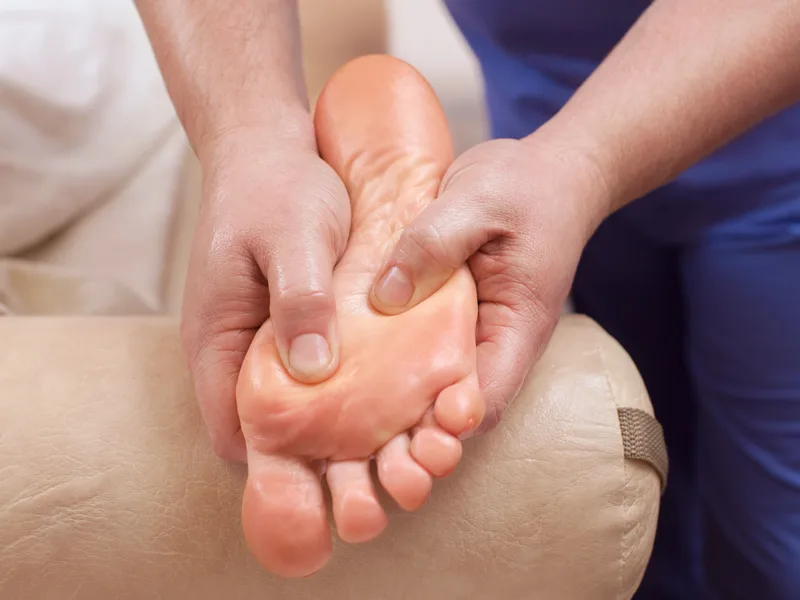
Symptoms of plantar fasciitis
- ✓Sharp heel pain with the first steps of the day or after rest
- ✓A dull, aching throb along the bottom of the foot after long periods of standing
- ✓Pain that improves after a few minutes of walking but returns later
- ✓Tightness or tenderness at the front of the heel bone
- ✓Increased pain after activity rather than during it
- ✓Difficulty walking barefoot on hard floors
Common causes
- Overpronation or flat arches that overstretch the fascia with each step
- Tight calf muscles and Achilles tendon that pull the heel attachment
- Sudden increases in training volume or duration (overuse)
- Prolonged standing on hard surfaces with poor footwear
- Hip and pelvic misalignment that shifts load asymmetrically onto one foot
- Excess body weight increasing force through the heel with every step
- Altered gait from a previous ankle, knee, or hip injury
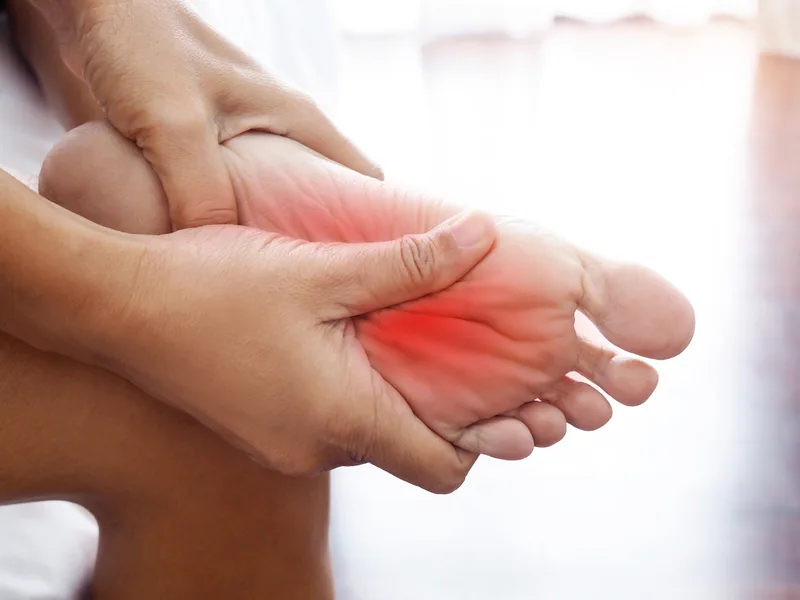
Our approach
How we treat plantar fasciitis in Hudsonville
- Step 1
Thorough exam
We assess foot mechanics, arch structure, gait pattern, and the alignment of your ankle, knee, hip, and pelvis to find where the excess loading is actually coming from — not just where it hurts.
- Step 2
A clear, personalized plan
You leave the first visit with a plain-English explanation of what's driving your heel pain and a specific, time-bound care plan — targeted soft tissue work, adjustments, and exercise, not open-ended guesswork.
- Step 3
Gentle treatment & rehab
We combine chiropractic adjustments, plantar fascia soft-tissue release, calf and arch stretching, and corrective exercise to relieve pain now and rebuild the mechanics that keep it from returning.
The basics
Understanding plantar fasciitis
The plantar fascia is a thick band of connective tissue that runs along the bottom of your foot, connecting your heel bone to the base of your toes. It acts as a shock absorber and supports the arch with every step you take. When the fascia is chronically overloaded — from poor mechanics, tight calves, flattened arches, or abnormal gait — tiny tears accumulate at the heel attachment and trigger the inflammatory cycle that causes plantar fasciitis. The classic morning pain happens because the fascia shortens overnight, and the first steps of the day re-stretch those irritated fibers all at once.
What most people don't realize is that plantar fasciitis is rarely a foot problem alone. How your ankle, knee, hip, and pelvis move directly affects how force loads through the arch. Overpronation, leg-length differences, tight hip flexors, or poor pelvic alignment can all shift excess stress onto the plantar fascia — which is why treating the foot in isolation so often leads to frustrating, slow progress. A full-body mechanical assessment lets us find where the loading problem truly starts and build a care plan that fixes it.

New Patient Special
$49
Consultation, exam, and first adjustment (as clinically appropriate) for new patients.
New patients only. Excludes Medicare/Medicaid and personal-injury cases. Mention this offer when booking.
Types of plantar fasciitis and heel pain we treat
Heel pain is not always textbook plantar fasciitis, and the right care depends on what’s actually happening in your foot and the rest of your kinetic chain. We regularly help Hudsonville-area patients with:
- Classic plantar fasciitis — the hallmark first-step morning pain from chronic overloading of the heel attachment, addressed with soft-tissue release, stretching, and corrective exercise.
- Heel spur pain — bony growths that develop alongside chronic fascia tension; the spur itself rarely causes pain, but the inflamed tissue around it does, and we treat that tissue and its mechanical cause.
- Overpronation-driven arch pain — when flat arches or inward rolling of the foot overstretch the fascia with every step; gait retraining, foot adjustments, and orthotic guidance are central to the plan.
- Runner’s and athlete’s heel pain — overuse presentations from training load spikes, often tied to sports injury rehab and hip or knee alignment work (see also knee pain).
- Gait-compensated heel pain — plantar fasciitis driven by asymmetric loading from a hip-pain issue, leg-length difference, or prior ankle injury; we treat the chain, not just the foot.
- Overuse heel pain in desk workers and on-feet professionals — prolonged standing on hard floors in poor footwear combined with tight calves; see also overuse injuries.
Your exam tells us which pattern applies so your plan is built for your foot — and everything above it.
When to see a chiropractor in Hudsonville
Most people try to walk off heel pain, but the longer the fascia is overloaded without correction, the more stubborn it becomes. Consider booking an exam if you notice:
- Morning heel pain that has lasted more than a week or two
- Pain that goes away briefly but returns after standing or activity
- Heel pain that keeps coming back every few months
- Aching that has spread into the arch or Achilles area
- Heel pain alongside knee or hip discomfort on the same side — a sign the whole chain may be involved
- Pain that is worsening despite rest, stretching, and new shoes
During your first visit we get to the bottom of it with a thorough foot, gait, and alignment exam — then walk you through exactly what we found and how we’ll fix it.
What to expect at your first visit
Your first appointment takes about 45–60 minutes and is focused entirely on understanding your heel pain before we treat it. We’ll:
- Listen to your story — when the pain started, what makes it better or worse, your footwear, activity level, and how it’s affecting your daily routine.
- Examine thoroughly — foot mechanics, arch structure, ankle and hip range of motion, gait pattern, and orthopedic testing to pinpoint the source and any contributing factors up the chain.
- Explain what we found — in plain English, with a specific, time-bound care plan and realistic expectations for how long recovery takes.
- Start care when appropriate — many patients receive their first plantar fascia soft-tissue work and foot adjustment the same visit, and leave with a home-stretching protocol to start immediately.
You are never locked into open-ended treatment — just a clear plan with a real finish line.
Drug-free plantar fasciitis relief — without medication or surgery
Cortisone injections can quiet heel pain temporarily, but they do not fix overpronation, tight calves, or the gait and alignment patterns that caused the fascia to break down in the first place — and repeated injections carry real risks to the tissue. Surgery for plantar fasciitis is rarely necessary and comes with significant recovery time. Chiropractic care offers a third path — relieve the pain and correct the mechanics driving it, without drugs or downtime. For most Hudsonville-area patients, that means getting back to morning walks, workouts, and long days on their feet faster, and staying there. And if your exam ever suggests imaging, specialist care, or custom orthotics beyond what we provide, we will tell you honestly and help coordinate that care.
Why Hudsonville-area patients choose ABC Chiropractic
Patients from Hudsonville, Jenison, Grandville, Georgetown Township, and Allendale choose us because we look at the whole picture — not just the bottom of your foot. As a trusted local heel-pain specialist, Dr. Nick Fischer combines gentle chiropractic adjustments of the foot and ankle, hands-on plantar fascia soft-tissue release, and targeted corrective exercise into one coordinated plan. When hip or knee mechanics are part of the problem, we address those too — so the heel pain resolves and stays resolved.
Ready to take a pain-free first step? Our New Patient Special makes your first visit easy, and you can book an appointment online in under a minute.
Why choose chiropractic
Chiropractic care vs. the typical plantar fasciitis routine
| Comparison factor | Chiropractic Care | Pain Meds & Surgery |
|---|---|---|
| Addresses the root cause | ✓Corrects mechanics and alignment | ✕Masks the symptoms |
| Drug-free & non-invasive | ✓Always | ✕Rarely |
| Risk of side effects | ✓Minimal | ✕Higher (cortisone, rupture, surgery) |
| Personalized to you | ✓Custom care plan | ✕One-size-fits-all |
| Builds long-term foot strength | ✓Rehab included | ✕Seldom addressed |
| Typical recovery | ✓Active & gradual | ✕Often prolonged or recurring |
Treatment options
Services we use to relieve plantar fasciitis
Chiropractic Care
Gentle, precise chiropractic adjustments in Hudsonville, MI that restore motion to restricted joints and relieve back pain, neck pain, and headaches at the source.
Learn more →Physiotherapy
Personalized corrective exercise and rehab in Hudsonville strengthen weak links, fix posture, and keep back pain, neck pain, and shoulder pain from coming back.
Learn more →Athlete Care
Sports injury rehab in Hudsonville helps athletes of every level recover from strains and overuse injuries and return to play stronger, with a clear, staged plan.
Learn more →Related conditions
Other conditions we treat in Hudsonville
Patient reviews
What our Hudsonville patients say
“I came in with months of low-back pain and felt real relief after the first week. Dr. Fischer actually listens and explains everything.”
“Best chiropractor in Hudsonville. The whole team is friendly and the adjustments are gentle — never rushed.”
“Helped my sciatica when nothing else did. I highly recommend ABC Chiropractic to anyone on the fence.”
What causes plantar fasciitis?+
Plantar fasciitis develops when the connective tissue along the bottom of your foot is chronically overloaded. The most common culprits are overpronation, tight calf muscles and Achilles tendons, sudden jumps in activity, prolonged standing on hard surfaces, and poor hip or pelvic alignment that shifts excess force onto one foot. Our exam identifies which of these is driving your heel pain so we can target it directly.
Can a chiropractor help plantar fasciitis?+
Yes. Chiropractors are well-positioned to treat plantar fasciitis because we look beyond the foot. We adjust foot and ankle joints to restore normal motion, perform soft-tissue release on the fascia and calf, and address hip or pelvic alignment issues that are overloading the heel. Corrective exercise completes the plan so the pain doesn't come back.
Why does my heel hurt most with the first steps of the day?+
During sleep your plantar fascia shortens slightly. When you stand up and put weight through your foot, that shortened, irritated tissue is suddenly stretched all at once — producing the signature sharp morning pain. It typically eases after a few minutes of walking as the fascia warms up and lengthens.
How many visits will I need for plantar fasciitis?+
It varies based on how long you've had it and what's driving it. Acute cases often respond within a few weeks; chronic or complicated cases take longer. After your exam, Dr. Fischer gives you a specific, time-bound care plan with a realistic endpoint — not open-ended treatment.
Is chiropractic safe for heel pain?+
Yes. The adjustments, soft-tissue release, and exercises we use for plantar fasciitis are gentle and have an excellent safety record. We screen on the first visit to confirm you're a good candidate and refer out if imaging or specialist care is needed.
Does insurance cover plantar fasciitis chiropractic treatment?+
Many major plans cover chiropractic care for plantar fasciitis. Share your insurance details before your first visit and we'll verify your benefits so there are no surprises.
Do I need a referral or X-rays before coming in?+
No referral is needed in Michigan. Most plantar fasciitis cases don't require imaging before we start care, though we may order a foot X-ray if we suspect a heel spur or stress fracture is complicating the picture.
Can plantar fasciitis come from a hip or knee problem?+
Absolutely. Hip and pelvic misalignment changes how your gait loads the foot, and knee or ankle issues can create compensatory patterns that overload the plantar fascia. Treating the foot alone and ignoring the chain above it is one of the main reasons people struggle with stubborn, recurring heel pain.
How can I relieve plantar fasciitis pain at home between visits?+
Stretch your calves and plantar fascia before your first steps in the morning, roll the arch with a frozen water bottle, avoid bare feet on hard floors, and wear supportive shoes with a slight heel rise. These strategies help manage symptoms — your care plan addresses the underlying mechanics that create the problem.
Will orthotics help my plantar fasciitis?+
Custom or quality over-the-counter orthotics can reduce stress on the plantar fascia by supporting the arch and controlling pronation. We'll advise whether orthotics are likely to help your specific foot structure and how they fit into your overall plan.
Can plantar fasciitis heal on its own?+
Mild cases sometimes improve with rest, stretching, and better footwear. But if you have persistent morning pain, pain that keeps returning, or heel pain tied to a gait or alignment problem, conservative chiropractic care resolves it far more reliably — and faster — than waiting it out.