Spinal Decompression in Hudsonville
Non-surgical motorized spinal traction in Hudsonville gently stretches the spine to relieve herniated discs, sciatica, and chronic neck and back pain — drug-free.
ABC Chiropractic
Spinal Decompression in Hudsonville
If a herniated disc, sciatica, or chronic back pain has you looking for a non-surgical answer, spinal decompression therapy at our Hudsonville clinic may be exactly what you need. Dr. Nick Fischer uses a motorized traction table to gently stretch your spine in precise, computer-controlled cycles — relieving pressure on compressed discs and the nerves around them without drugs, injections, or surgery. It's one of the most comfortable, effective conservative options available for disc-related back and neck pain anywhere in West Michigan.
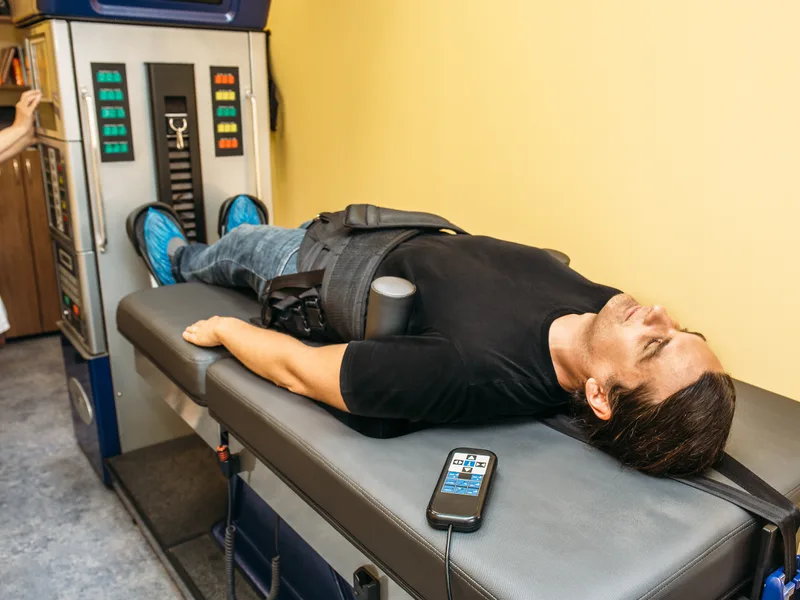
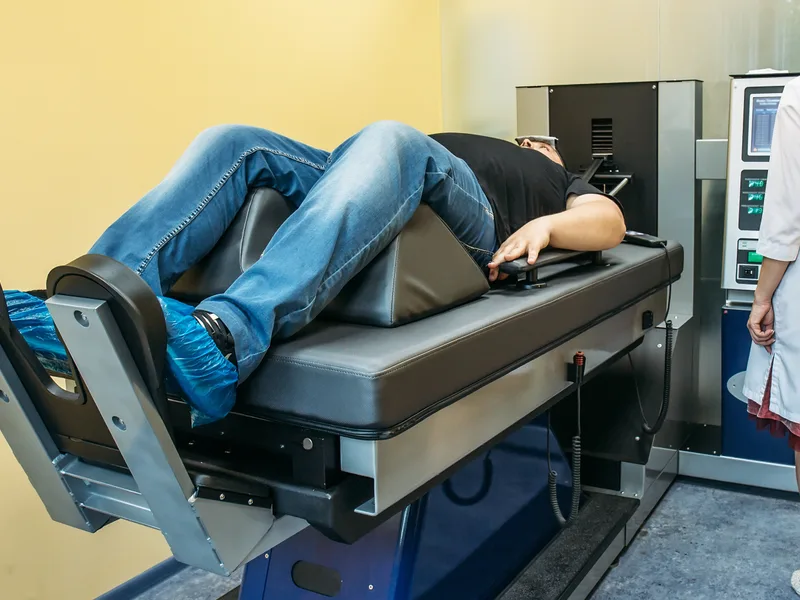
How it works
What to expect with spinal decompression
- Step 1
Thorough candidacy exam
Before your first session, Dr. Fischer reviews your history and performs orthopedic and neurological testing to confirm you're a good candidate and rule out contraindications — so decompression is both safe and targeted for your specific disc issue.
- Step 2
A personalized decompression plan
You receive a clear, time-bound schedule of sessions with specific tension levels and angles dialed in for your spine — not a generic protocol. We explain exactly what to expect and when you should feel improvement.
- Step 3
Decompression + adjustments + rehab
Each visit combines the traction session with gentle chiropractic adjustments to restore joint motion and targeted core exercises that protect the disc and keep pain from returning.
Why patients choose it
Benefits of spinal decompression
Non-surgical — no incisions, anesthesia, or recovery time
Drug-free relief from disc, nerve, and radiating pain
Comfortable — most patients describe sessions as relaxing
Addresses the root cause by restoring disc height and hydration
Pairs with adjustments and rehab for lasting results
Safe option after conservative care fails and before surgery is considered
The basics
About spinal decompression
Your spinal discs act as cushions between the vertebrae, absorbing shock and allowing movement. When a disc bulges, herniates, or loses height from everyday wear, it can press on nearby nerves and produce pain, numbness, or weakness that radiates down the leg or arm. Traditional pain relief — rest, anti-inflammatories, injections — can quiet symptoms for a while, but they don't restore the disc or take the pressure off the nerve. Spinal decompression does both at once.
During a decompression session, the motorized table creates a controlled negative pressure inside the disc — essentially a gentle vacuum effect — that coaxes bulging material back toward center and draws oxygen-rich fluid back in to help the disc rehydrate and heal. At the same time, tight muscles and restricted spinal joints get a chance to release. Most patients find the 15–20 minute sessions deeply relaxing, and many feel noticeable relief within the first few visits. We pair decompression with chiropractic adjustments and targeted rehab so the results hold long after your plan ends.
New Patient Special
$49
Consultation, exam, and first adjustment (as clinically appropriate) for new patients.
New patients only. Excludes Medicare/Medicaid and personal-injury cases. Mention this offer when booking.
What is spinal decompression?
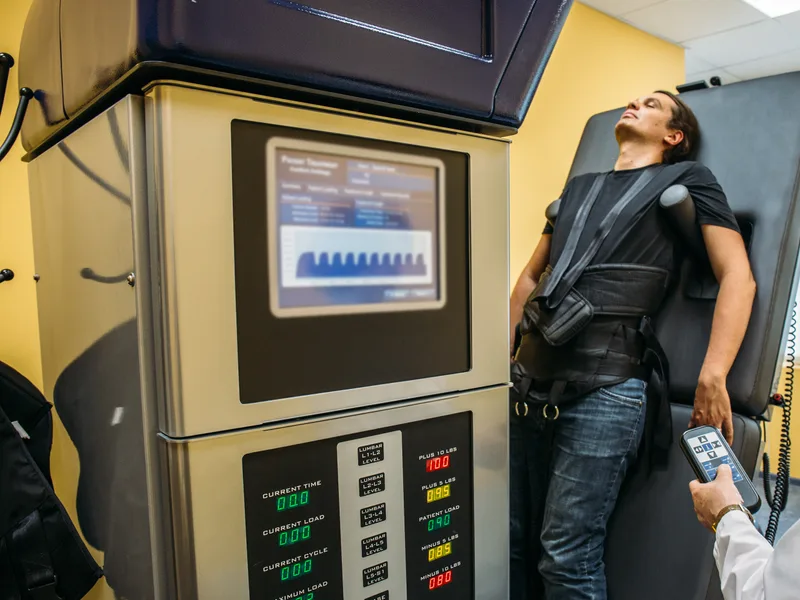
Non-surgical spinal decompression is a motorized traction therapy that gently stretches the spine in precise, computer-controlled cycles. As the table creates a carefully calibrated pull and release, negative pressure builds inside the affected disc — drawing bulging or herniated material back toward center and pulling in the oxygen and fluid the disc needs to heal. The result is less pressure on the disc itself and on the nerves running through the surrounding foramen.
Unlike older manual traction, modern computerized decompression targets a specific spinal level and angle, adapts tension in real time, and keeps the surrounding muscles from bracing against the pull — making it more comfortable and more effective than its predecessors. Sessions last roughly 15–20 minutes, and most patients describe them as deeply relaxing.
What to expect
Your first visit begins with a candidacy exam. Dr. Fischer reviews your history, performs orthopedic and neurological testing, and — if you’ve had recent imaging — reviews it to confirm which disc level is involved and whether decompression is the right fit. If you’re a good candidate, your personalized plan is mapped out: the number of sessions, the tension settings, and the angle of pull are all tailored to your spine.
During each session you’ll lie comfortably on the motorized table. A harness positions you so the traction is directed precisely at the target disc. The table then cycles through gentle stretch-and-release intervals — most patients relax, and many fall asleep. After decompression, Dr. Fischer typically adds a chiropractic adjustment to restore joint motion, followed by targeted core or stabilization exercises that protect the disc and reinforce the work done on the table.
Patients often feel some relief within the first three to five visits. Lasting improvement builds over the full course of care as the disc rehydrates and the supporting muscles grow stronger.
Who it helps
Spinal decompression is especially well suited for patients with:
- Herniated or bulging discs in the lower back or neck
- Sciatica — pain, numbness, or weakness running from the low back into the leg
- Pinched nerves causing arm or leg pain
- Chronic low back pain that hasn’t responded to adjustments alone
- Neck pain with radiating arm symptoms
- Degenerative disc disease causing ongoing stiffness and nerve irritation
- Leg pain or arm pain traced to a compressed spinal nerve
It works best as part of a combined plan — decompression relieves disc pressure, chiropractic adjustments restore joint mechanics, and rehab builds the core stability that keeps the disc from re-loading. If your candidacy exam suggests surgery is the better path, we’ll tell you honestly and help coordinate that referral.
Why choose ABC Chiropractic
Patients from Hudsonville, Jenison, Grandville, Georgetown Township, and Allendale choose us because we treat the source, not just the symptom. Dr. Nick Fischer has helped many West Michigan patients avoid surgery by combining computerized spinal decompression, gentle chiropractic care, and targeted physiotherapy into one clear, time-bound plan — so you get real relief now and the strength to stay pain-free.
Ready to see if decompression is right for you? Our New Patient Special makes your first visit easy, and you can book an appointment online in under a minute.
What it helps
Conditions we treat with spinal decompression
Is spinal decompression safe?+
Yes. It is a non-invasive, drug-free therapy. After a thorough exam we confirm you're a good candidate before beginning a plan. We screen out contraindications — including recent fractures, certain surgical hardware, and osteoporosis — so the therapy is always appropriate for you.
What does decompression feel like?+
Most patients find it relaxing — a gentle stretch and release across the low back or neck over about 15–20 minutes. There is no sharp pulling or discomfort. Many patients doze off during the session.
How many sessions will I need?+
A typical plan is 12–20 sessions over 4–6 weeks, depending on how long you've had the problem and how your disc responds. Dr. Fischer gives you a specific plan with a clear endpoint after your exam — not open-ended treatment.
Will my insurance cover spinal decompression?+
Coverage varies by plan. We verify your benefits before your first visit and walk you through what's covered. Affordable self-pay plans are also available for patients without coverage.
Can decompression help a herniated or bulging disc?+
Yes — that's the primary use. The negative pressure created during traction encourages disc material to retract and rehydrate, reducing pressure on the nerves. It works well for lumbar herniation causing sciatica and cervical herniation causing arm pain.
Is decompression the same as traction?+
They're related but not identical. Traditional traction pulls the spine in one direction at a fixed tension. Computerized spinal decompression uses precise, variable-tension cycles and can be angled to target a specific disc level — making it more effective and more comfortable than older manual or weighted traction.
Can decompression help neck pain and arm pain?+
Yes. Cervical decompression uses the same principle applied to the neck — gentle computer-controlled traction to relieve pressure on cervical discs and the nerves that travel into the arm. It's a leading conservative option for cervical herniation, pinched nerves, and arm tingling or numbness.
Who is not a candidate for spinal decompression?+
Patients with recent spinal fractures, spinal fusion hardware in the area being treated, severe osteoporosis, active cancer in the spine, or pregnancy in the lumbar region are typically not candidates. Your candidacy exam covers all of these so we only proceed when it's the right choice.
How do I know if my back pain is disc-related?+
Disc pain often radiates into the leg (sciatica) or arm, worsens when sitting or bending forward, and may include numbness or weakness. An orthopedic and neurological exam — and imaging if needed — lets Dr. Fischer confirm the source and tell you whether decompression is the right tool.
What is spinal decompression used for?+
It's used for herniated and bulging discs, degenerative disc disease, sciatica, pinched nerves in the neck and low back, facet syndrome, and chronic neck or back pain that hasn't responded to other conservative care. We're honest about expected outcomes and refer out if surgery is the better path.
Explore more
Related services
Patient reviews
What our Hudsonville patients say
“I came in with months of low-back pain and felt real relief after the first week. Dr. Fischer actually listens and explains everything.”
“Best chiropractor in Hudsonville. The whole team is friendly and the adjustments are gentle — never rushed.”
“Helped my sciatica when nothing else did. I highly recommend ABC Chiropractic to anyone on the fence.”