Acupuncture in Hudsonville
Licensed acupuncture in Hudsonville, MI — very fine needles at specific points to support your body's natural pain relief and relaxation, alongside chiropractic care.
ABC Chiropractic
Acupuncture in Hudsonville
Acupuncture has been used for thousands of years to support pain relief and relaxation — and today it fits naturally alongside chiropractic care for patients in Hudsonville and West Michigan who want a broader, more holistic approach. Our licensed acupuncturist uses very fine, sterile needles placed at specific points to encourage your body's own healing responses, without medication or downtime.
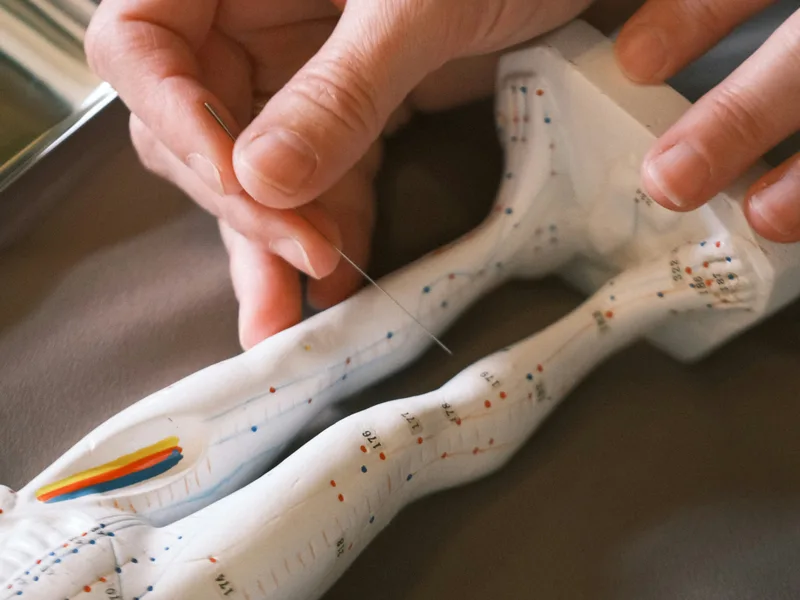

How it works
What to expect with acupuncture
- Step 1
Intake and point selection
Your acupuncturist reviews your health history, symptoms, and treatment goals, then maps out the specific points most relevant to your condition before a single needle is placed.
- Step 2
Needle placement and session
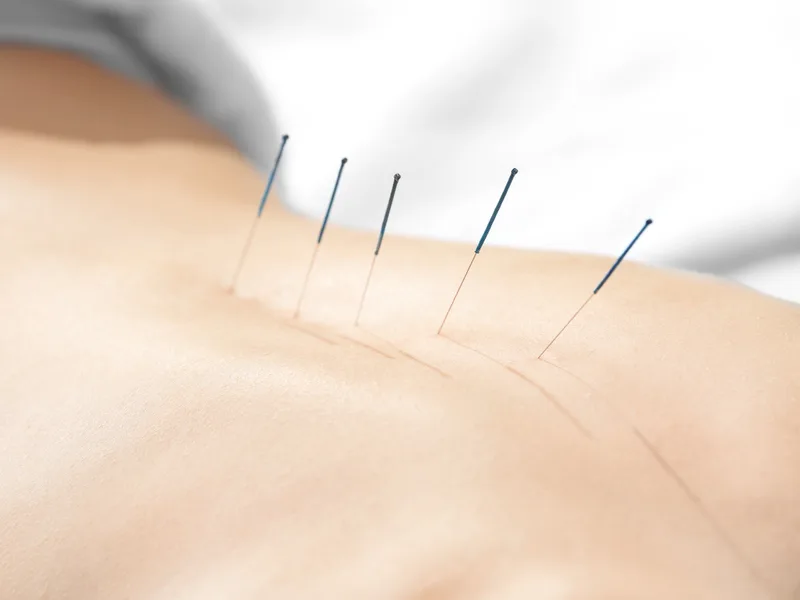
Very fine, sterile single-use needles are placed at selected points and left for 20–30 minutes while you rest. Most patients find this deeply relaxing rather than uncomfortable.
- Step 3
Coordinated follow-up
Your acupuncturist communicates with Dr. Fischer so your acupuncture sessions and chiropractic adjustments work together — a unified plan, not two separate siloes.
Why patients choose it
Benefits of acupuncture
Supports the body's natural pain-relief response
Can reduce muscle tension and nervous-system overactivation
No drugs, no downtime, and minimal side effects
Complements chiropractic adjustments for deeper, longer-lasting relief
Useful for a wide range of musculoskeletal and stress-related conditions
Performed by a licensed acupuncturist in a calm clinical setting
The basics
About acupuncture
Traditional acupuncture is rooted in the idea that stimulating precise points on the body — along pathways called meridians — influences pain signals, circulation, and the nervous system. Modern research suggests acupuncture prompts the release of endorphins and activates nerve pathways involved in pain modulation, which is consistent with what many patients report: reduced pain, muscle relaxation, and a calmer nervous system after treatment.
Acupuncture is not a cure-all, and we present it honestly. It works best as part of a coordinated care plan — complementing spinal adjustments and soft-tissue therapy rather than replacing them. For conditions like chronic neck pain, headaches, low back pain, and sciatica, adding acupuncture to your plan can deepen and extend the relief you get from chiropractic care.
New Patient Special
$49
Consultation, exam, and first adjustment (as clinically appropriate) for new patients.
New patients only. Excludes Medicare/Medicaid and personal-injury cases. Mention this offer when booking.
What is acupuncture?
Acupuncture is one of the oldest recorded therapeutic practices in the world, with roots in traditional Chinese medicine spanning more than two thousand years. At its core it involves placing very fine, sterile needles at precise anatomical points to influence pain signaling, circulation, and the nervous system.
Modern clinical research has found that acupuncture stimulates nerve fibers in the skin and muscle, prompting the release of endorphins (your body’s natural pain-relief chemicals) and activating descending pain-control pathways in the brain. That does not mean it works for everyone or for every condition — but for musculoskeletal pain in particular, the evidence is solid enough that organizations including the American College of Physicians recommend it as a first-line option for chronic low back pain.
At our office, acupuncture is performed by a licensed acupuncturist and offered as a complement to chiropractic care — not as a stand-alone cure, and never with inflated promises.
What to expect
Your first acupuncture appointment begins with a thorough intake conversation. Your acupuncturist will ask about your symptoms, health history, stress levels, sleep, and any medications before deciding which points to use. This step matters — point selection is specific to you, not a one-size-fits-all protocol.
Once you are positioned comfortably on the table, very fine single-use needles (about the width of a human hair) are placed at selected points. You may feel a brief dull pressure or warmth as each needle reaches depth — most patients describe this as much milder than a blood draw. The needles are then left in place for 20–30 minutes while you rest quietly. Many patients find the session so relaxing that they fall asleep.
Afterward your acupuncturist notes how you responded and adjusts the plan accordingly. Sessions typically occur one to two times per week, and we aim to give you a clear, realistic sense of how many sessions to expect before re-evaluating.
Who it helps
Acupuncture may be a useful addition to your plan if you are dealing with:
- Back pain — particularly chronic low back pain that has not fully resolved with adjustments alone
- Neck pain — including tension-related tightness and restricted range of motion
- Headaches and migraines — acupuncture has reasonable evidence for reducing both frequency and intensity
- Sciatica — where reducing nerve irritation through multiple modalities may speed recovery
- Stress-related muscle tension and poor sleep that are slowing your overall progress
It is also a good option for patients who prefer to minimize medication use or who want to add a relaxation-focused component to their care plan. If you are unsure whether acupuncture is right for your situation, just ask — we will give you an honest answer based on your exam.
Why choose ABC Chiropractic
What makes acupuncture at our office different is integration. Your acupuncturist and Dr. Fischer communicate directly, so your needle work and spinal adjustments are coordinated rather than siloed. You get one unified plan with one goal: getting you better as efficiently as possible.
If you are curious whether acupuncture belongs in your care plan, the best first step is an exam. Visit our new patients page to learn what to expect, or contact us to book your appointment. We serve patients throughout Hudsonville, Jenison, Grandville, Allendale, and Georgetown Township.
What it helps
Conditions we treat with acupuncture
What is acupuncture and how does it work?+
Acupuncture involves placing very fine, sterile needles at specific points on the body. It is thought to stimulate nerve pathways and prompt the release of endorphins — your body's natural pain-relieving chemicals — as well as support circulation and muscle relaxation.
Does acupuncture hurt?+
Most patients feel little to no discomfort. You may notice a mild sensation — a dull ache, warmth, or a brief twitch — when a needle reaches the right depth. The session itself is usually deeply relaxing, and many patients doze off.
How many sessions will I need?+
It depends on your condition and how long you have had it. Some patients notice improvement after two or three sessions; others with chronic conditions benefit from a longer series. After an initial evaluation, your acupuncturist will recommend a realistic, time-bound plan.
Is acupuncture safe?+
Yes, when performed by a licensed acupuncturist using sterile single-use needles. We screen every patient before starting care and will be straightforward if acupuncture is not a good fit for your situation.
What conditions does acupuncture help?+
We most commonly use acupuncture alongside chiropractic care for back pain, neck pain, sciatica, and headaches. It can also be helpful for muscle tension, stress, and sleep disruption — though we focus on what the evidence and your exam support, not overpromising.
How is acupuncture different from dry needling?+
Dry needling targets specific muscle trigger points to release tension and is typically performed by a physical therapist or chiropractor. Traditional acupuncture follows a broader meridian-based system administered by a licensed acupuncturist. Both use fine needles, but the training, point selection, and goals differ.
Will my insurance cover acupuncture?+
Coverage varies widely by plan. Some major insurers now include acupuncture benefits, particularly for back pain. We recommend calling your insurer in advance — or let our front desk verify your benefits before your first appointment.
Can I receive acupuncture and chiropractic care on the same day?+
Often yes, and we coordinate the two so they complement each other. Your care team will advise you on the best sequence and spacing based on how your body responds.
What should I do before an acupuncture appointment?+
Eat a light meal a couple of hours before (avoid arriving on an empty stomach), wear comfortable clothing that allows easy access to arms and legs, and let your acupuncturist know about any medications, bleeding disorders, or implanted devices such as a pacemaker.
Is acupuncture a replacement for chiropractic care or medical treatment?+
No — and we do not position it that way. Acupuncture is a complement that can extend and deepen the results of your chiropractic plan. If you ever need imaging, a specialist, or medical intervention, we will tell you honestly and help coordinate that care.
Explore more
Related services
Patient reviews
What our Hudsonville patients say
“I came in with months of low-back pain and felt real relief after the first week. Dr. Fischer actually listens and explains everything.”
“Best chiropractor in Hudsonville. The whole team is friendly and the adjustments are gentle — never rushed.”
“Helped my sciatica when nothing else did. I highly recommend ABC Chiropractic to anyone on the fence.”