Shockwave Therapy in Hudsonville
Acoustic shockwave therapy in Hudsonville restarts the body’s healing response for stubborn tendon problems like plantar fasciitis and tennis elbow.
ABC Chiropractic
Shockwave Therapy in Hudsonville
When plantar fasciitis, tennis elbow, or another stubborn tendon problem refuses to heal on its own, shockwave therapy may be the missing piece. Dr. Nick Fischer uses acoustic shockwave therapy to send gentle pressure waves deep into injured soft tissue, waking up the body's own repair process in areas that other conservative care hasn't been able to reach. Patients across Hudsonville, Jenison, and West Michigan are often surprised by how well this non-invasive treatment works — and how quickly.
How it works
What to expect with shockwave therapy
- Step 1
Assessment and mapping
We examine the injury site, review your history, and use palpation to map the precise area of tendon or soft-tissue involvement before selecting shockwave parameters tailored to your condition.
- Step 2
Focused shockwave treatment
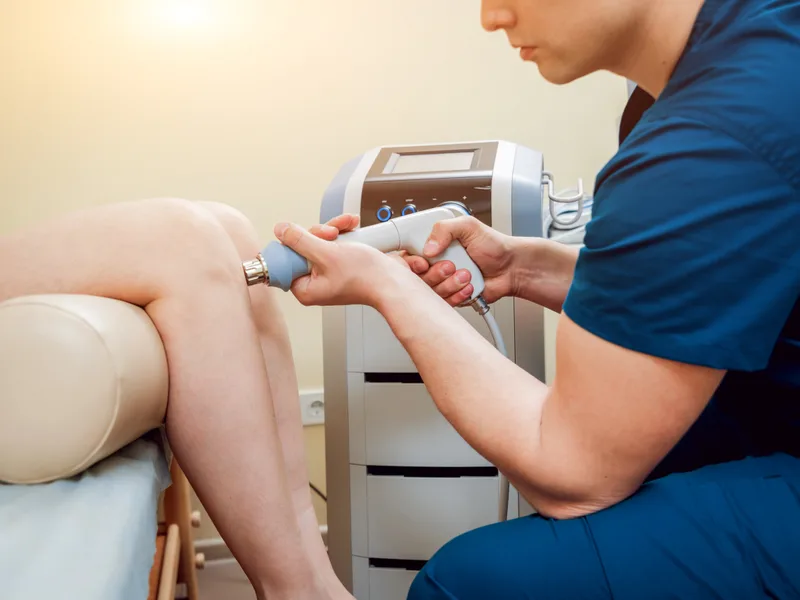
The handheld applicator is moved slowly over the treatment area while delivering acoustic pulses. Sessions typically last 5–15 minutes — most patients feel a deep pressure or mild ache that eases quickly after the device stops.
- Step 3
Rehab and home support
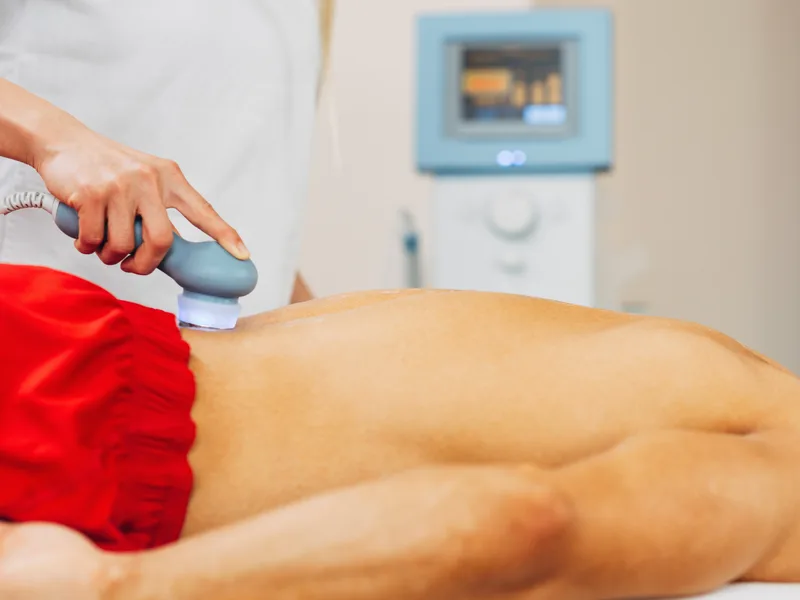
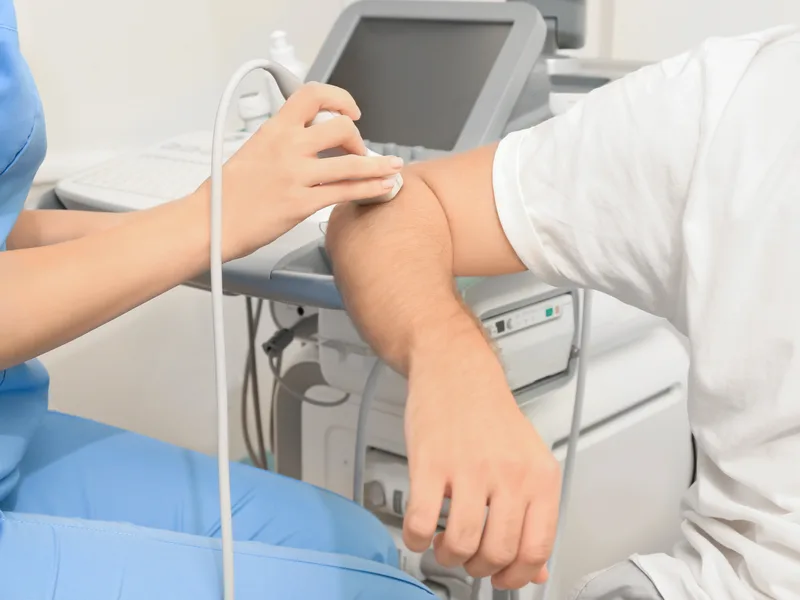
We pair shockwave therapy with targeted stretching, loading exercises, and any complementary services — such as laser or ultrasound — that will accelerate your recovery between sessions.
Why patients choose it
Benefits of shockwave therapy
Stimulates genuine tissue repair in chronically stalled injuries
Non-invasive — no needles, no incisions, no downtime
Reduces calcific deposits in tendons and shoulders
Typically 3–6 sessions versus months of failed conservative care
Can delay or eliminate the need for cortisone injections or surgery
Effective for plantar fasciitis, tennis elbow, shoulder tendinopathy, and more
The basics
About shockwave therapy
Tendons and ligaments have a notoriously poor blood supply, which is why chronic injuries in these tissues — plantar fasciitis, rotator cuff tendinopathy, calcific shoulder, lateral epicondylitis (tennis elbow) — heal so slowly or stall out entirely. The tissue may no longer be acutely inflamed, but the underlying damage has never fully resolved. Conventional therapies may relieve symptoms temporarily, yet the root problem persists.
Shockwave therapy changes that equation. Each pressure wave creates micro-mechanical stress in the targeted tissue that the body interprets as a fresh injury signal — which is exactly what a stalled healing response needs. The result is renewed blood vessel formation, release of growth factors, collagen remodeling, and a genuine repair cycle that can produce lasting improvement where months of rest, stretching, and anti- inflammatory treatment have not.
New Patient Special
$49
Consultation, exam, and first adjustment (as clinically appropriate) for new patients.
New patients only. Excludes Medicare/Medicaid and personal-injury cases. Mention this offer when booking.
What is shockwave therapy?
Shockwave therapy (formally known as extracorporeal shockwave therapy, or ESWT) is a non-invasive treatment that uses a handheld device to deliver focused acoustic pressure waves through the skin and into injured tendons, ligaments, or other soft tissue. The waves create controlled micro-stress in the tissue that triggers a cascade of natural repair processes — new blood vessel formation, release of growth factors, and collagen remodeling — restarting a healing response that has stalled.
The “shockwave” name sounds dramatic, but the treatment is gentle. There are no needles, no incisions, and no drugs. Patients feel a deep pressure or mild ache during the session that fades quickly once the device stops. Most people are back to their normal day immediately after.
Shockwave therapy is best known for plantar fasciitis, tennis elbow (lateral epicondylitis), calcific shoulder, and rotator cuff tendinopathy — conditions where the tissue has been injured long enough that it struggles to heal on its own.
What to expect
Your first shockwave session starts with a brief assessment. Dr. Fischer will review your history, examine the affected area, and use palpation to precisely map where the injured tissue is most reactive. This targeting step matters — placing the shockwave energy accurately is what makes the difference between good outcomes and average ones.
During treatment you’ll be comfortably positioned on the table. The handheld applicator is applied directly to the skin over the treatment area (with a small amount of coupling gel) and moved slowly over the injury site while delivering pulses. Sessions typically run 5–15 minutes depending on the area and the condition. Many patients describe the sensation as a deep vibration or pressure; the most reactive spots may feel like a brief ache that eases almost immediately when the device moves on.
After the session there’s no recovery time. Mild soreness for a day or two is normal and actually a good sign — it means the healing response is starting. Most patients complete 3–6 weekly sessions to achieve lasting improvement.
Who it helps
Shockwave therapy is especially effective for chronic tendon and soft-tissue problems that haven’t responded to standard conservative care. If you’ve been stretching, icing, or resting an injury for months without full resolution, shockwave may be the catalyst your body needs.
Conditions we commonly treat with shockwave:
- Plantar fasciitis — persistent heel pain from an inflamed or degenerated plantar fascia
- Elbow pain (tennis and golfer’s elbow) — lateral or medial epicondylitis that won’t fully heal
- Shoulder pain and rotator cuff tendinopathy — including calcific tendinitis of the shoulder
- Overuse injuries — chronic strain patterns in athletes and active patients
Not every patient is a candidate — we screen at your exam for the small number of contraindications — but the majority of people with these chronic soft-tissue problems are good candidates and see meaningful improvement.
Why choose ABC Chiropractic
Shockwave therapy works best as part of a complete plan, not as a standalone procedure. At ABC Chiropractic, Dr. Nick Fischer pairs shockwave with targeted rehab, laser therapy, ultrasound therapy, and other tools that keep the healing momentum going between sessions. You get a clear diagnosis, an honest timeline, and a plan built around your injury — not a one-size-fits-all protocol.
We serve patients from Hudsonville, Jenison, Grandville, Allendale, and Georgetown Township. Ready to get your stubborn injury finally moving in the right direction? Visit our New Patient page or contact us to schedule your exam.
What it helps
Conditions we treat with shockwave therapy
What is shockwave therapy?+
Shockwave therapy (also called extracorporeal shockwave therapy or ESWT) uses a handheld device to send high-energy acoustic pressure waves through the skin into injured tendons or soft tissue. The waves stimulate blood flow, break down calcium deposits, and trigger the body's natural repair cycle in areas that have stalled.
Does shockwave therapy hurt?+
Most patients feel a deep pressure, vibration, or temporary ache during the session — especially over the most irritated spot. The sensation is usually very tolerable and fades within minutes of the treatment ending. We adjust intensity to your comfort level throughout.
How many shockwave sessions will I need?+
Most conditions respond well in 3–6 sessions spaced about a week apart. After your exam Dr. Fischer will give you a realistic plan with a clear timeline based on your specific injury and how long you've had it.
Is shockwave therapy safe?+
Yes. It is a non-invasive, drug-free therapy supported by substantial research for tendinopathies. We screen every patient before starting — there are a small number of contraindications (such as blood-clotting disorders or active infection in the area) that your intake and exam will rule out.
Who is a good candidate for shockwave therapy?+
Patients with chronic tendon or soft-tissue injuries — plantar fasciitis, tennis elbow, shoulder tendinopathy, calcific deposits, or overuse injuries — who haven't responded fully to rest, stretching, or other conservative care are often excellent candidates. We confirm candidacy at your exam.
Can shockwave therapy help plantar fasciitis?+
Plantar fasciitis is one of the most studied and best-responding conditions for shockwave therapy. When stretching, orthotics, and rest haven't resolved the heel pain, shockwave often produces the healing response the tissue has been missing.
What is the recovery like after a session?+
There is no downtime. Some patients experience mild soreness in the treated area for 24–48 hours — similar to post-exercise soreness — which is a normal sign of the healing process starting. Most people return to normal daily activities immediately.
Will my insurance cover shockwave therapy?+
Coverage varies by plan. Many policies do not yet cover ESWT, though some do — particularly for plantar fasciitis. We'll check your benefits before your first visit and walk you through affordable self-pay options if needed.
How does shockwave therapy compare to cortisone injections?+
Cortisone reduces inflammation in the short term but does not repair the underlying tendon damage and can weaken tissue with repeated use. Shockwave stimulates genuine structural repair and in many studies shows better long-term outcomes for chronic tendinopathies without the risks of repeated injections.
Can shockwave be combined with other therapies?+
Absolutely — and it often works best as part of a broader plan. Dr. Fischer commonly pairs shockwave with laser therapy, ultrasound, or a targeted rehab program to accelerate healing and help results last.
Explore more
Related services
Patient reviews
What our Hudsonville patients say
“I came in with months of low-back pain and felt real relief after the first week. Dr. Fischer actually listens and explains everything.”
“Best chiropractor in Hudsonville. The whole team is friendly and the adjustments are gentle — never rushed.”
“Helped my sciatica when nothing else did. I highly recommend ABC Chiropractic to anyone on the fence.”